LightME 2025
Light and new scientific frontiers:
FROM THEORY TO APPLICATIONS
MAY 16th, 2025
Messina, Italia
THE WORKSHOP
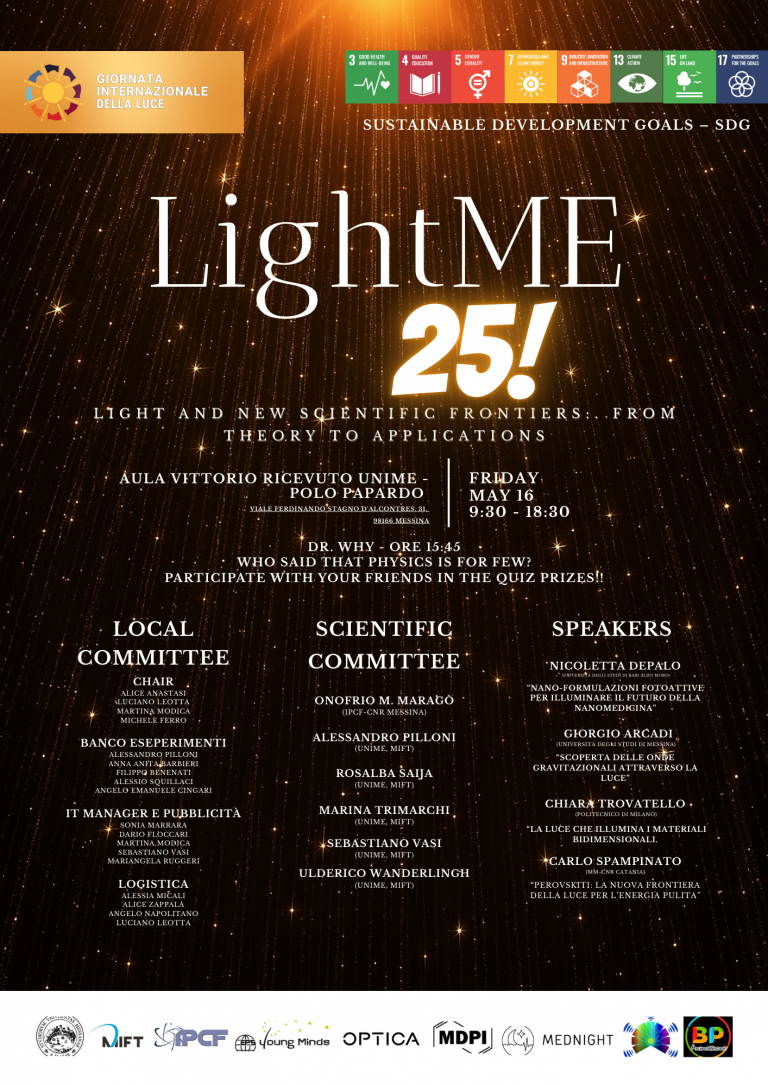
On the occasion of the “International Day of Light”, on May 16th from 9:30 to 17:30 in the Aula Magna "Vittorio Ricevuto" of the Papardo Center of the University of Messina (Viale Ferdinando Stagno d'Alcontres, 31, 98166 Messina ME), the workshop “LightME 2025 - Light and new scientific frontiers: from theory to applications” will take place.
The aim of the workshop is to provide guidance for those who are preparing to undertake a path of scientific studies and research, while creating an informal opportunity for mutual exchange. The day’s program includes talks by experts in the field and a poster session that will allow participants to discuss the role of light and light-based technologies in science, culture, education and sustainable economic development. Among the main topics and activities covered in the workshop are the fundamental principles of physics on: (i) light-matter interaction: theory and applications, (ii) photonics and nanotechnologies, (iii) physical models, solutions and sustainable technologies in the biomedical and energy sectors. Furthermore, to stimulate the interest of secondary school students towards physical sciences through a practical and engaging approach, simple experiments related to light are planned so that, through direct observation and practical experience, students are encouraged to develop a critical sense regarding scientific experiments. In the afternoon, the Workshop participants will be involved in an interactive Quiz game on topics related to light. The different phases of the game will be conducted by a moderator who will make the experience engaging and dynamic!
In the poster session, those who wish can present their research activity and/or a scientific essay related to the theme of light and the topics of the workshop. (for information, visit the “Call of Abstract” page).
For all those who will participate in the workshop, registration is recommended through the homonymous section “Registration“.
Target Audience
Scholars and researchers, PhD students in Physics, and undergraduate and graduate students in Physics; selected groups of STEM students in Secondary High Schools.
The event is part of the activities carried out by the University of Messina to promote culture, themes and issues related to environmental, economic and social sustainability.



PROGRAMME
Friday, May 16th
09:30 – 10:00: Welcome address
10:00 – 10:45: Nicoletta Depalo
10:45 – 11:30: Giorgio Arcadi
11:30 – 12:15: Coffe-break and poster session
12:15 – 13:00: Chiara Trovatello
13:00 – 15:00: Lunch break and poster session
15:00 – 15:45: Carlo Spampinato
15:45 – 18:00: Quiz game – Dr. Why
18:00 – 18:15: Conclusive remarks
SPEAKERS
SPEAKERS
- Nicoletta Depalo (IPCF-CNR SS Bari)
- Giorgio Arcadi (Università degli Studi di Messina)
- Chiara Trovatello (Politecnico di Milano)
- Carlo Spampinato (IMM-CNR Catania)

Nicoletta Depalo
IPCF-CNR SS, Bari, Italy
Lighting the future of nanomedicine by photoactive nano-formulations.
Nanotechnology is transforming medical research by enabling innovative diagnostic and therapeutic strategies with higher efficacy and reduced invasiveness compared to conventional macromedicine. Within this context, photo-based nanomedicine leverages photoactive nano-agents capable of converting light into heat, luminescence, or reactive species, offering precise, minimally invasive treatments and controlled drug release [1]. Inorganic nanoparticles—such as metals, semiconductors, carbon, or oxides—stand out for their unique physico-chemical properties and are widely employed in bio-imaging, bio-labelling and phototherapies such as photothermal therapy [2]. Their integration into lipid, polymeric, or mesoporous silica-based nanocarriers, alone or with drugs, allows the development of multifunctional platforms [3]. Functionalization with antibodies or ligands further enhances their targeting and therapeutic efficiency.
Selected aspects of the interplay between light and nanomedicine will be addressed, presenting representative photoactive nano-formulations developed for the diagnosis and treatment of severe diseases, including gastrointestinal cancers and liver diseases. Emphasis will be placed on luminescent liposomes and photothermal silica- or polymer-based nanocarriers with clinical potential. These advanced nanoplatforms offer promising prospects for targeted imaging and therapy, paving the way for more effective and minimally invasive treatment strategies.
References
[1]. J. U Menon et al. Theranostics, 2013; 3(3), 152-166.
[2]. N. Depalo et al. J. Mater. Chem. B, 2020,8, 1823-1840
[3]. E. Fanizza et al. Nanomaterials, 2022, 12(15), 2545
Nicoletta Depalo is a permanent research scientist at CNR-IPCF SS Bari. She holds a degree in Chemistry (2002) and a Ph.D. in Chemistry of Innovative Materials (2007), both from the University of Bari. Since 2008, she has developed extensive experience in the design and synthesis of hybrid multifunctional nanoplatforms for biomedical applications. Her research focuses on the design and development of targeted organic and inorganic nanocarriers for use in nanomedicine. Her interests also include the study of extracellular nanovesicles—particularly exosomes—for diagnostic purposes and their manipulation as physiological nanocarriers for therapeutic applications. She currently leads the nanomedicine research line at CNR-IPCF SS Bari, supported by several funded projects for which she serves as the scientific coordinator for CNR-IPCF.
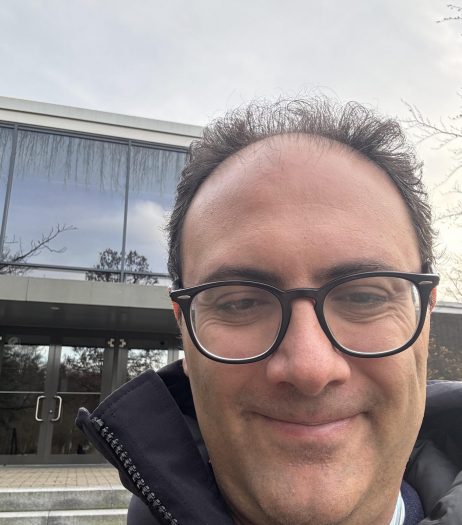
Giorgio Arcadi
University of Messina, MIFT Department, Messina, Italy
Discovery of Gravitational Waves through Light.
Modern Gravitatational Wave detectors are based on interferometry. I will describe the functioning principles and the main technological challenges of modern interferometers. Furthermore, I will illustrate the main discoveries, together with their interpretation, and provide, finally, an overview of future developments.
I got the bachelor and master degrees at, respectively, the Universities of L’Aquila and Roma la Sapienza. I have got the PhD at the International School for Advanced Studies (SISSA) Trieste. I have subsequently did postdocs at the University of Goettingen (Germany), Laboratoire de Physique Theorique Orsay (France) and Max Planck Institute for Nuclear Physics Heidelberg (Germany). I have then worked at RTdA at the University of Roma Tre. Since September 2021 I have been working at the University of Messina first as RTdB and then, since 01 September 2024, as Associate Professor.

Chiara Trovatello
Polytechnic of Milan, Milan, Italy
Shining light on two dimensional materials.
From Siracusa to New York, passing by Milan, my journey in photonics has been driven by a fascination with light and its interaction with matter at the atomic scale. In this talk, I will drive you through the interesting world of two-dimensional materials, introducing their remarkable optical properties and showing how we can use them to generate and manipulate light. I’ll share key moments from my research in nonlinear optics and quantum optics, and reflect on the role of collaboration, curiosity, and inclusivity in science.
Born and raised in Siracusa, Italy, Chiara Trovatello moved to Milan, Italy, at the age of 18 for her studies in Engineering Physics and her PhD in Physics. She is now Marie Skłodowska-Curie Global Fellow at Columbia University in New York, USA and Assistant Professor of Physics at Politecnico di Milano, Italy, working in the field of nonlinear optics with 2D materials.
Chiara Trovatello passionately advocates for open science, ethical research, equal representation and opportunities in STEM. She was the founder and the former president of the Optica Student Chapter of Milan. From 2024 she continues her strong leadership and mentorship activity as an Optica Ambassador.
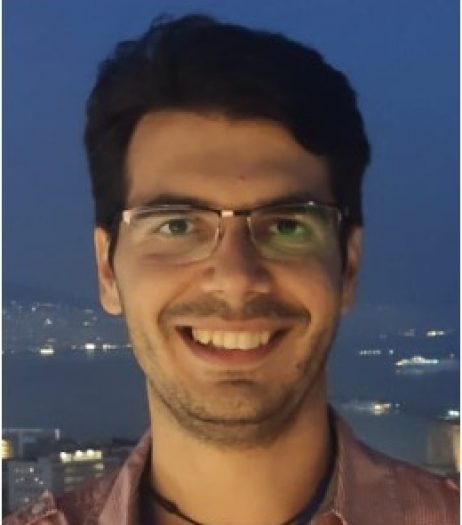
Carlo Spampinato
IMM-CNR, Catania, ITALY
Perovskites: The Emerging Frontier of Light for Clean Energy.
This talk will briefly introduce the fundamental principles underlying the interaction of light with perovskite materials for photovoltaic applications. The structure and operating principles of perovskite-based solar cells will be described, along with potential applications. A specific focus will be dedicated to agrivoltaic applications, highlighting practical and high-impact case studies.
References
– Valastro, Salvatore, et al. “Preventing lead leakage in perovskite solar cells with a sustainable titanium dioxide sponge.” Nature Sustainability 6.8 (2023): 974-983.
– Spampinato, C., et al. “Spongy TiO2 layers deposited by gig-lox sputtering processes: Contact angle measurements.” Journal of Vacuum Science & Technology B 41.1 (2023).
– Spampinato, Carlo, et al. “Improved radicchio seedling growth under CsPbI3 perovskite rooftop in a laboratory-scale greenhouse for Agrivoltaics application.” Nature Communications 16.1 (2025): 1-14.
Carlo Spampinato holds a degree in Physics from the University of Catania and earned his PhD from the University of Messina. A lifelong science enthusiast with a strong commitment to environmental sustainability, he has focused his research on the energy sector. His work centers on the development of perovskite solar cells, achieving significant results in applications with high environmental impact, such as agrivoltaics and building-integrated photovoltaics.
COMMITEE
SCIENTIFIC COMMITTEE
- Onofrio M. Maragò (IPCF-CNR Messina)
- Alessandro Pilloni (UNIME, Dipartimento MIFT)
- Rosalba Saija (UNIME, Dipartimento MIFT)
- Marina Trimarchi (UNIME, Dipartimento MIFT)
- Sebastiano Vasi (UNIME, Dipartimento MIFT)
- Ulderico Wanderlingh (UNIME, Dipartimento MIFT)
LOCAL COMMITTEE
- Alice Anastasi
- Anna Anita Barbieri
- Filippo Benenati
- Angelo Emanuele Cingari
- Michele Ferro
- Dario Floccari
- Luciano Leotta
- Sonia Marrara
- Alessia Micali
- Martina Modica
- Angelo Napolitano
- Mariangela Ruggeri
- Alessio Squillaci
- Alice Zappalà
Sponsor 2025